Sorry this is late. The only homework for our last night of class is a one-page paper reflecting on the class. Please look over your notes and identify some things you have learned. Name three things you learned from the class, and name one thing you will take away from this class. That's it.
We will not start class until after the ballet recital, and we will only have class for an hour.
See you Tuesday.
Wednesday, May 8, 2013

Thursday, April 18, 2013
Homework for Apr 25
IMPORTANT: I have to be out of town on Apr 30, so we are going to use the make-up day on Apr 25. Class will be 12:30-2:00pm on Thursday April 25. It will be a shorter than usual class, and it's fine for those of you in Biology to bring your lunch to class. We are primarily going to watch some videos on the reliability of the Bible.
Homework:
1A: Listen to the Tim Keller sermon called "Literalism: Isn't the Bible Historically Unreliable and Regressive?" You listened to one other sermon from this series, and as always, Keller is excellent in talking about why you can trust the Bible. When you listen to it, write that you did on a sheet of paper and sign it.
1B: Take notes on the sermon. Once again, this is a skill you need to work on developing. So tell me the 3 reasons it doesn't make sense that the Bible is just legend and the 3 things he says to do when you think a passage is offensive.
1C: Also share one point from the sermon that you thought was most helpful. Explain why. One paragraph should suffice.
2A: Go to this dangerous website: Skeptics Annotated Bible. I want you to read some of the problems that this skeptic has with the book of Genesis (he lists 134 absurdities he finds in just that book). Note: make sure you talk to your folks about anything that is confusing to you. I think this may challenge you a little, but it's good to be challenged a little, it's good to talk to your parents about this stuff, and it's good to learn that there are good answers to hard questions.
2B: Write down 3 problems/absurdities he finds and how you would respond. Remember, articulate and winsome! In 2-3 sentences for each, explain how you would answer a person who asked this question. Be helpful. Don't attack. And don't say, "Well, I just have faith." There are logical answers to most, if not all of these questions.
2C: Find one thing that he says that you don't have an answer for. Ask your folks, consult a commentary or two, and try to figure out a good answer to that question. Write a paragraph on the absurdity he found and how you would now answer it.
That's it. See you next Thursday.
Homework:
1A: Listen to the Tim Keller sermon called "Literalism: Isn't the Bible Historically Unreliable and Regressive?" You listened to one other sermon from this series, and as always, Keller is excellent in talking about why you can trust the Bible. When you listen to it, write that you did on a sheet of paper and sign it.
1B: Take notes on the sermon. Once again, this is a skill you need to work on developing. So tell me the 3 reasons it doesn't make sense that the Bible is just legend and the 3 things he says to do when you think a passage is offensive.
1C: Also share one point from the sermon that you thought was most helpful. Explain why. One paragraph should suffice.
2A: Go to this dangerous website: Skeptics Annotated Bible. I want you to read some of the problems that this skeptic has with the book of Genesis (he lists 134 absurdities he finds in just that book). Note: make sure you talk to your folks about anything that is confusing to you. I think this may challenge you a little, but it's good to be challenged a little, it's good to talk to your parents about this stuff, and it's good to learn that there are good answers to hard questions.
2B: Write down 3 problems/absurdities he finds and how you would respond. Remember, articulate and winsome! In 2-3 sentences for each, explain how you would answer a person who asked this question. Be helpful. Don't attack. And don't say, "Well, I just have faith." There are logical answers to most, if not all of these questions.
2C: Find one thing that he says that you don't have an answer for. Ask your folks, consult a commentary or two, and try to figure out a good answer to that question. Write a paragraph on the absurdity he found and how you would now answer it.
That's it. See you next Thursday.
Thursday, April 4, 2013
Homework for Apr 16
Your assignments:
1A: Listen to the interview with Peter Singer who is one of the world's leading ethicists and is a professor at Princeton University. You can find the interview here on Philosophy Bites. It's the first interview, called "Life and Death Decision Making."
1B: Write a one-page response to the podcast. Name some things you agree with and things you disagree with. Explain why. As always, make sure you are winsome, helpful, and humble. And don't just share the gospel with him. Interact with his ideas and state your case well.
However, if you came to class, skip this. We listened to it and discussed it in class. Pays to come to class.
2: "Dear Caller" Instead of Doug, pretend you are serving at a Crisis Pregnancy Center and you grab the phone. There is no one else around, so you must respond to this caller. What do you say?
3A: Read "Principles of a Christian Environmental Ethic" by John Bergstrom on pages 259-268 in your Student Manual. Write on a sheet of paper that you read it, and sign it.
3B: Answer 5 of the 10 questions on page 269. You pick the 5.
Next class is on Radical Environmentalism. Enjoy!
1A: Listen to the interview with Peter Singer who is one of the world's leading ethicists and is a professor at Princeton University. You can find the interview here on Philosophy Bites. It's the first interview, called "Life and Death Decision Making."
1B: Write a one-page response to the podcast. Name some things you agree with and things you disagree with. Explain why. As always, make sure you are winsome, helpful, and humble. And don't just share the gospel with him. Interact with his ideas and state your case well.
However, if you came to class, skip this. We listened to it and discussed it in class. Pays to come to class.
2: "Dear Caller" Instead of Doug, pretend you are serving at a Crisis Pregnancy Center and you grab the phone. There is no one else around, so you must respond to this caller. What do you say?
Amy is a 17-year old high school student. She is pregnant, and her parents want her to get an abortion because they are leaders in their church and it would be "best for the family and the church if no one knew." She wants to keep the baby, but doubts her boyfriend will marry her. If she keeps the baby, her parents will likely kick her out. She knows it would be too hard to be 17, a single mom, and make ends meet. An abortion seems the simplest answer to this complex question, but she doesn't want to have an abortion.What do you say to Amy?
3A: Read "Principles of a Christian Environmental Ethic" by John Bergstrom on pages 259-268 in your Student Manual. Write on a sheet of paper that you read it, and sign it.
3B: Answer 5 of the 10 questions on page 269. You pick the 5.
Next class is on Radical Environmentalism. Enjoy!
Wednesday, April 3, 2013
Notes from Apr 2
For you slackers, skippers, and soccer players, here are the notes from the most amazing two hours you've ever missed. I'm joking by the way. Don't get offended.
Euthanasia Definitions
Euthanasia Examples
Abortion Facts
Abortion Laws
Abortion Debate
People argue over:
Logical Fallacies
Philosophical Thoughts (from Scott Klusendorf, "The Case Against Abortion" from Understanding the Times)
Debating Abortion (adapted from Scott Klusendorf, "The Case Against Abortion" from Understanding the Times)
Euthanasia Definitions
- Eu = good + thanatos = death
- Can be called mercy killing or Physician Assisted Suicide
- Voluntary = patient requesting death
- Involuntary = patient not able to request it
- Passive = withholding treatment
- Active = killing with substance or force
- Living Will = paperwork stating your preferences for life support and death
Euthanasia Examples
- Plato and Socrates (pro-euthanasia) and Hippocrates (anti-euthanasia) debated the topic.
- Action T4- Nazi’s ordering of handicapped children and adults to be killed (over 75,000 adults and children, many forcibly taken from their homes). They referred to their actions as euthanasia.
- Oregon’s Death with Dignity Act legalized physician assisted death in 1994. Washington did the same in 2008.
- Dr. Jack Kevorkian (Dr. Death) assisted 130 people in death between 1990 and 1998 with his machine which let patients give themselves lethal injections. He famously said, “Dying is not a crime.”
- Terri Schiavo became arguably the most famous case of euthanasia due to court battle that lasted from 1998-2005. She had her feeding tube removed and died while making headlines across the world.
Abortion Facts
- Usually refers to the voluntary termination of a pregnancy, but some people use the term to refer to miscarriages.
- There are about 40 million abortions worldwide each year.
- There is evidence of abortions in many ancient civilizations (China, Egypt, Greece, etc)
- Roe v. Wade in 1973 legalized abortion in the US
Abortion Laws
- You can see the various laws from around the world on Wikipedia.
- Notice how in Muslim and Catholic countries, abortion is illegal with exceptions. You can see worldviews playing out.

Abortion Debate
People argue over:
- Choice: “Women have a right to choose what happens to their own bodies” and “The unborn child has a choice too.”
- Necessity: “Abortion must be legal for special cases of life and death, etc.” and “If abortion was illegal, women would have back-alley abortions”
- Personhood: The debate has shifted from a fetus being a “life” to it not being a “person." Roe v. Wade argued that a fetus is not a person, because if it is, it would be protected under the 14th Amendment
Logical Fallacies
- Begging the question: “A woman has the right to control her own body” ignores the fact that there are two bodies.
- Argument from silence: “The Bible doesn’t speak about abortion, so it is okay”
- Ad Hominem: “You are a man/teenager/never been through it, so your opinion doesn’t count”
- Red Herring: “If it were illegal, then women would have back alley abortions.”
- Several: “If you don’t like abortions, don’t have one.”
Philosophical Thoughts (from Scott Klusendorf, "The Case Against Abortion" from Understanding the Times)
- A fetus is said not to be a person because:
- Size: however, a 4 foot person is not less of a person than a 6 foot person
- Development: however, a kindergartner is not less of a person than a high-schooler
- Environment: however, a newborn in an incubator is not less of a person
- Independence: however, an adult who uses insulin is not less human
Debating Abortion (adapted from Scott Klusendorf, "The Case Against Abortion" from Understanding the Times)
- What Would Jesus Do? Show compassion, patience, and love as you talk about abortion. It is a very sensitive topic. Don't make people hate Jesus by the way you talk to them. Be humble, winsome, and careful. Don't argue, patronize, or insult anyone.
- Personhood : Clarify functioning as a person vs. being one. Even Roe V. Wade stated that a fetus is a person, but biblically (Ps 139 among others) states that it is. Stand firm that a fetus is a person. That is most often the underlying difference of opinion.
- Trot out the toddler: When people talk about a mother having the right to choose, about some children being unwanted, etc, ask if their logic could be applied to killing a toddler.
- Clarify moral vs. preference claims: Often people make pro-lifers sound like their case against abortion is personal, arrogantly not understanding the situation some people are in, etc. However, Christianity is against abortion because of morality not personal preference. Christians fundamentally believe it is God's role to decide life and death and that the Bible forbids killing.
- Relativism: When someone says not to force your view on them, ask why not, and whatever they say is them forcing their view on you.
Monday, March 11, 2013
Reminder: No Class March 12 and 26!
Classes are cancelled due to testing and Spring Break. I know... I'm crying myself to sleep each night because of it too...
Monday, March 4, 2013
Homework for Apr 2
The co-op class schedule has us taking off all of March (and I have a suspicion that the co-op board is controlled by totalitarian Marxists who won't allow us to meet, but it's just a theory). Our next class is on April 2, and the topic is abortion, euthanasia, and the right to life. These are mature and tough subjects, so please treat them that way. However, the class material and assignments will not be graphic, and we will only deal with the ethics of these areas. Here is the homework for that class:
1A. Read Beckwith's article "The Shifting Focus of the Abortion Debate" in your manual pages 225-231.
1B. Write that you read the article and sign your name. Then, answer the questions on page 232.
2A. Read Bohlin and Anderson's article "The Battle for Life" in your manual pages 233-237.
2B. Write that you read the article and sign your name. Then, answer the questions on page 238.
See you in April.

1A. Read Beckwith's article "The Shifting Focus of the Abortion Debate" in your manual pages 225-231.
1B. Write that you read the article and sign your name. Then, answer the questions on page 232.
2A. Read Bohlin and Anderson's article "The Battle for Life" in your manual pages 233-237.
2B. Write that you read the article and sign your name. Then, answer the questions on page 238.
See you in April.
Thursday, February 14, 2013
Homework for Feb 26
Changing gears again... it's time to talk about entertainment and how it affects our worldview.

1. Read "What to Look for When Watching Movies" by Brian Godawa. Find it on godawa.com's essays page. It's the sixth link down. It's an excellent article. Put on a sheet of paper that you read the article, and sign it.
2. Now think of a movie. Complete the nine things the Brian Godawa says to look for about that movie. In other words: Who is the protagonist? Who is the antagonist? What are the hero's weaknesses, faults and needs? Etc. Complete all nine things he says to watch for.
I think you'll enjoy the assignment a little more if you pick a movie that is a little confusing to you or one you aren't sure of the worldview. The Sound of Music won't be nearly as interesting to think through as Star Wars or some Disney movies. As always, get parental approval first. No bad movies!
3. Complete a take-home, open-note test on psychology and sociology. Click here to get the test.
Have a good week.
1. Read "What to Look for When Watching Movies" by Brian Godawa. Find it on godawa.com's essays page. It's the sixth link down. It's an excellent article. Put on a sheet of paper that you read the article, and sign it.
2. Now think of a movie. Complete the nine things the Brian Godawa says to look for about that movie. In other words: Who is the protagonist? Who is the antagonist? What are the hero's weaknesses, faults and needs? Etc. Complete all nine things he says to watch for.
I think you'll enjoy the assignment a little more if you pick a movie that is a little confusing to you or one you aren't sure of the worldview. The Sound of Music won't be nearly as interesting to think through as Star Wars or some Disney movies. As always, get parental approval first. No bad movies!
3. Complete a take-home, open-note test on psychology and sociology. Click here to get the test.
Have a good week.
Wednesday, January 30, 2013
Homework for Feb 12
We are going to start getting more practical in the class. First topic: roles of men, roles of women, and feminism. In the next class, I will cover much about the feminist movement. To prepare, you will study the complementarian position on men and women.
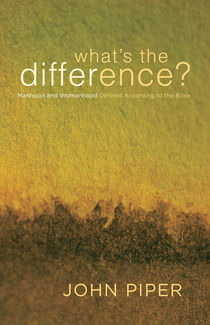
 Your only assignment is to read What's The Difference by John Piper. It's not very long. Your folks may have it, or you can read it for free here. (In chapter 5, just read the man or woman part, whichever is applicable).
On a sheet of paper, write that you read the book, and sign it.
Then answer these questions:
On a sheet of paper, write that you read the book, and sign it.
Then answer these questions:
- How does he define masculinity?
- What does it men for a man to "lead" his family biblically?
- How does he define femininity?
- Are women to submit to all men? Why or why not?
Thanks and enjoy.
Wednesday, January 16, 2013
Homework for Jan 29
Good to be back in the groove. Here is your homework:
1. Give a 2-3 sentence definition of each of these psychological terms. You'll need to look them up:

1. Give a 2-3 sentence definition of each of these psychological terms. You'll need to look them up:
- Behaviorism Psychology
- Humanist Psychology
- Nouthetic Christian Counseling
- Integration Christian Counseling
2A. Read the Charles Moore article on pages 163-169 of your manual. On a sheet of paper, write that you read the article and sign it.
2B. After the article, there are 10 questions on page 170. Answer 5 of the 10 questions (you choose which ones), and turn them in.
3. Dear Doug Letter. Respond to this letter. Remember to be helpful, winsome, and clear.
Hey! I hope the rest of your Christmas Break was good. It was good seeing you and my other friends. I miss you all. It was also nice having that break from school and work. But it's over now!
I've still been looking for a church since I've been at college. I miss our old church, and with me working and so busy, I've still not joined a church. I've been to one twice, though. I know you have told me that it's important to have "fellowship," but that's kind of what we are doing in this letter. I think I have fellowship with you and others. Why do you think it's so important for me to be part of a church?
I've started the new semester of classes. I'm taking Psych 101 and Soc 101, and a few other things. It's been interesting to learn about. This week, we talked about human nature and if people were basically good or bad. Most of us agreed that people are mostly good. When I think about the people that I know, they are just about all good and kind. I think some people are bad, like murderers and life-long criminals. One guy from a Christian club said that the Bible says that people aren't good by nature, but that sounds harsh. Is that true? What does the Bible actually say about human nature?
Hope you are good. Great seeing you over break. -Doug
That's it for the assignment. See you in two weeks.
Thursday, November 15, 2012
Homework: Worldview Paper

Here is the schedule for the holidays:
- Week of Nov 19-23: No homework, instead try to convince family members at Thanksgiving dinner that you are a Muslim. Or New Age. Or both. (Joking).
- Week of Nov 24-30: Work on paper, questions 1-3 (biology is coming...)
- Week of Dec 4: Class on biology
- Week of Dec 10-14: Work on paper, questions 4-6
- Weeks from Dec 17-Jan 4: Take a break for Christmas. Ho ho ho.
- Week of Jan 7-11: Finish paper, questions 7-8, and proofread it several times
- Jan 15: Turn in paper at class
A few thoughts about the paper:
- EXPECTATION: I'm giving you plenty of time on this, so I expect it to be very good. It's only 4-6 pages and not due for 2 months. So you have time to make it an excellent paper. Make it something that you could give to someone and they would understand the basics of these 6 world views.
- LENGTH: It says 4-6 pages. Therefore it can not be less than 4 full pages. It can not be more than 6. Go figure.
- FORMAT: It tells you font size, margin size, etc. Do what it says.
- WORKS CITED: A couple of you asked if you can use in-text citations. Yes. Use those or footnotes. Please make sure your works cited page or footnotes contain all the right info (author, title, date, page, etc).
- GRAMMAR: I will grade for grammar, spelling, format, etc. So have momma or a buddy proof it. And use spell-check, for crying out loud.
- SOURCES: You can use class books/notes as one resource. The others you need to find on your own. Don't cite wikipedia. I don't want to see a couple random websites as your only sources. Anyone can put an article on the internet, so use good sources from university websites, reputable news organizations, or good journalistic magazines (places like plato.stanford.edu, TIME Magazine, or USA Today... stuff you can trust). You may have books on other religions already at home. Or you may want to hit a library. I want to see real books and good articles as sources.
If you have other questions, let me know. Thanks!
Subscribe to:
Posts (Atom)